The short version
If you grew up around ajo, esusu or susu, you probably know how this works.
Five friends agree to save £100 each month. Every month, one person takes home £500. Simple enough. Until someone collects their money and stops contributing. Or the person holding the money goes quiet. Now nobody knows exactly who has paid. That's what we wanted to fix with SaveCircle a group savings fintech app.
What people were actually worried about
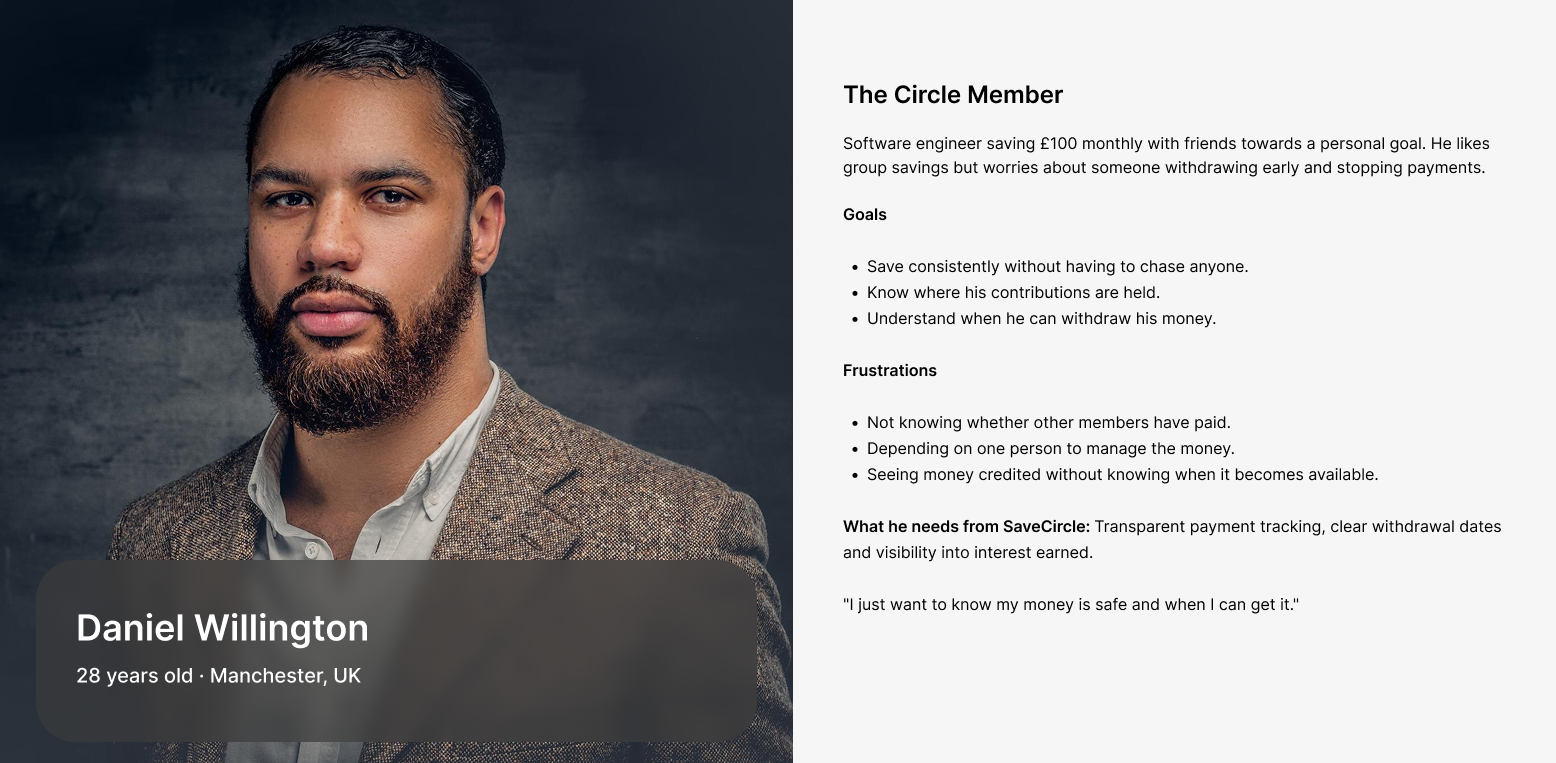
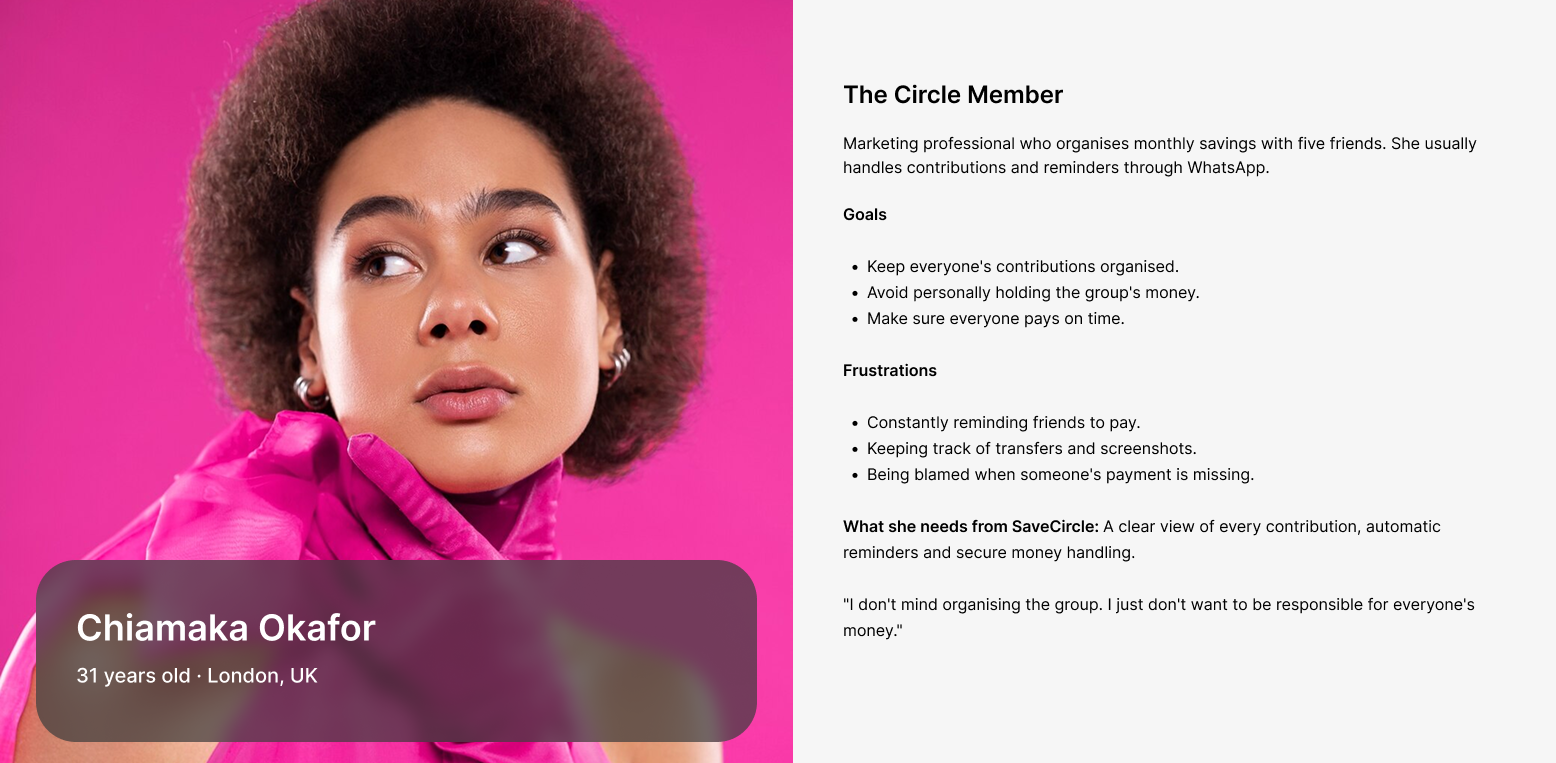
We spoke to 40 people through interviews and a short survey. 22 already saved in groups for trips, events, shared expenses or traditional rotating savings.
32 out of 40 mentioned trusting other members with their money as their biggest concern.
What interested me was that some were saving with friends and family. People they already knew. Yet they still worried about someone failing to keep their side of the agreement.
They wanted to know where their money was, who had contributed and when they had receive their payout.
The decision everything else depended on
The easiest thing to build would have been a contribution tracker. Everyone could see who had paid, but the money would still sit in someone's personal bank account.
We considered it, but that left the biggest risk untouched.
Another idea was to automatically replace members who stopped contributing. I pushed back on that. What happens when someone collects their payout in the first month and disappears? Bringing in a replacement doesn't recover the money they have already taken.
I proposed a different approach.
Everyone contributes monthly, but the money stays in escrow with a licensed financial partner. When it's someone's turn to receive their payout, we credit their balance, but they can't withdraw it until the entire savings cycle is complete. While they wait, the money earns interest.
This meant nobody could collect early and disappear with the group's contributions. It also changed something fundamental about traditional ajo: members could see their scheduled payout, but they had to wait until the circle ended to withdraw it.
The PMs and engineers worked through the financial model with our licensed partner. My responsibility was making those rules clear in the app, especially the difference between money credited to someone's balance and money available to withdraw.
My first design looked good and didn't work
I owned the core mobile flows, including circle creation, member selection and payment tracking.
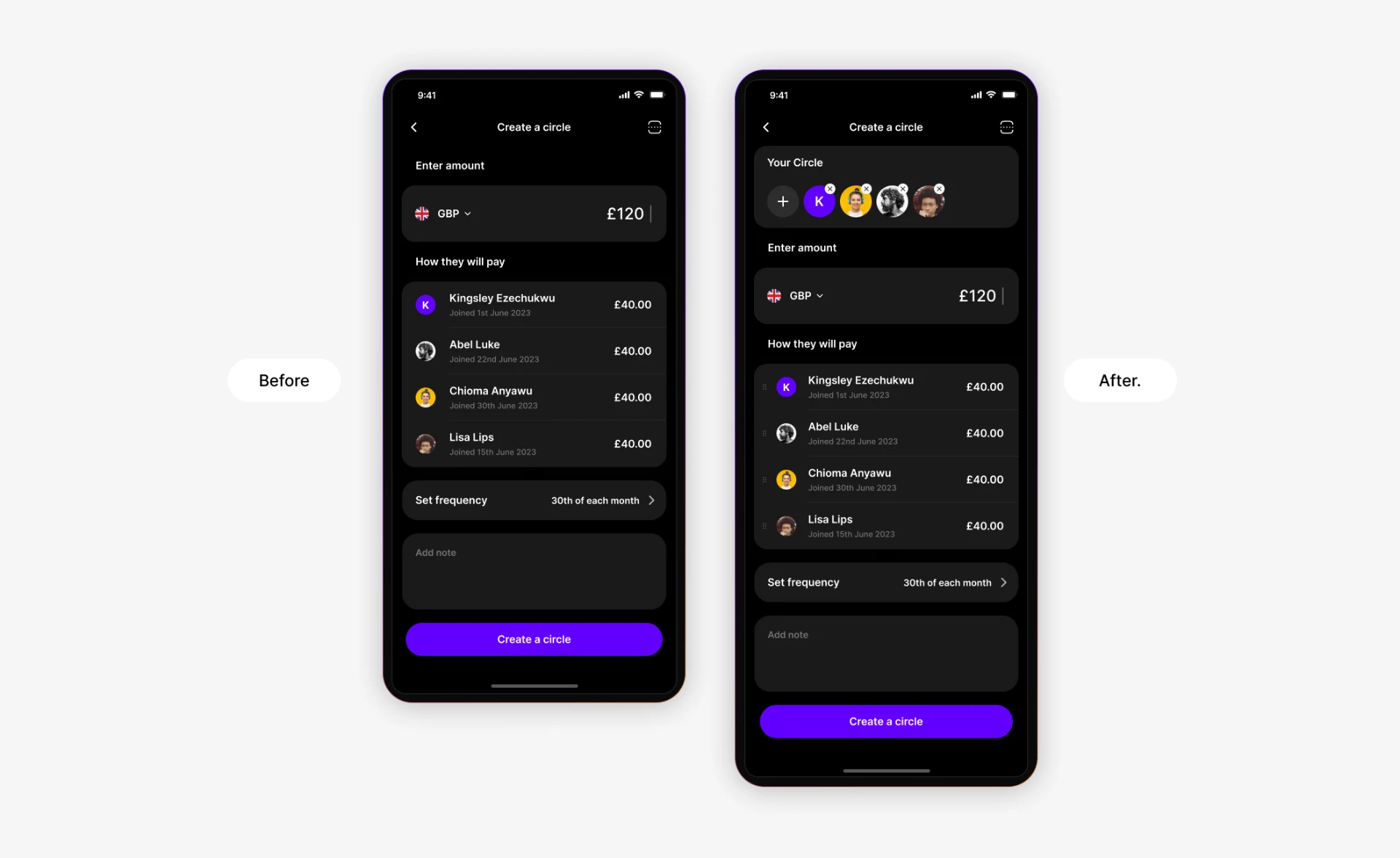
My first circle-creation screen started with the contribution amount and a payment list. I liked how clean it looked.
Then we tested it.
People kept going backwards to check who was actually in their circle. They couldn't see or change the group while setting the money.
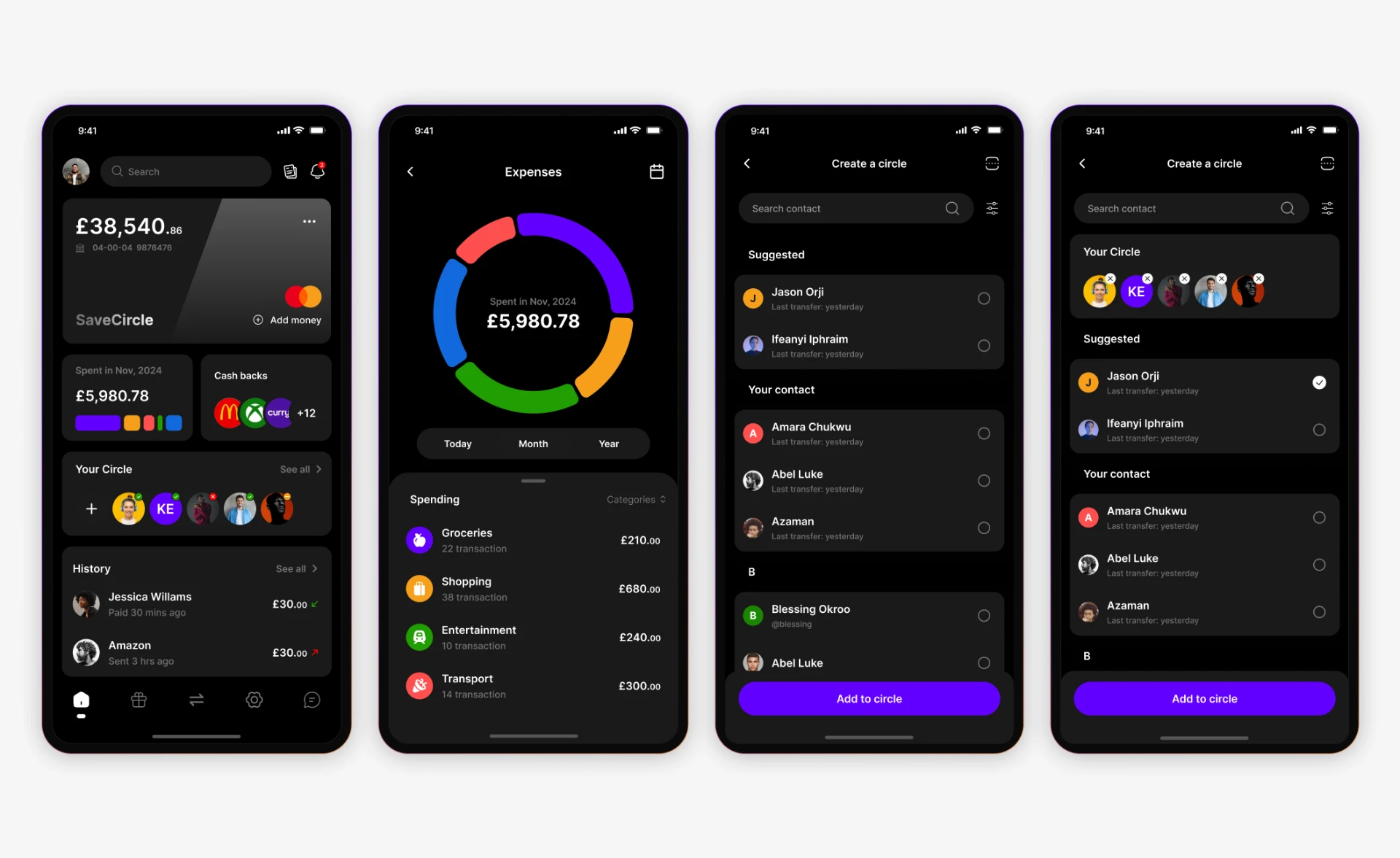
I moved members to the top of the screen as a row of photos, with options to add or remove someone. I also made the payout order draggable so organisers could arrange who received the money first.
That raised another question: what stops someone from changing the order after everyone has agreed?
The order needed to be visible before members committed, and changes after that would need proper agreement. It was something I hadn't considered enough in my first design.
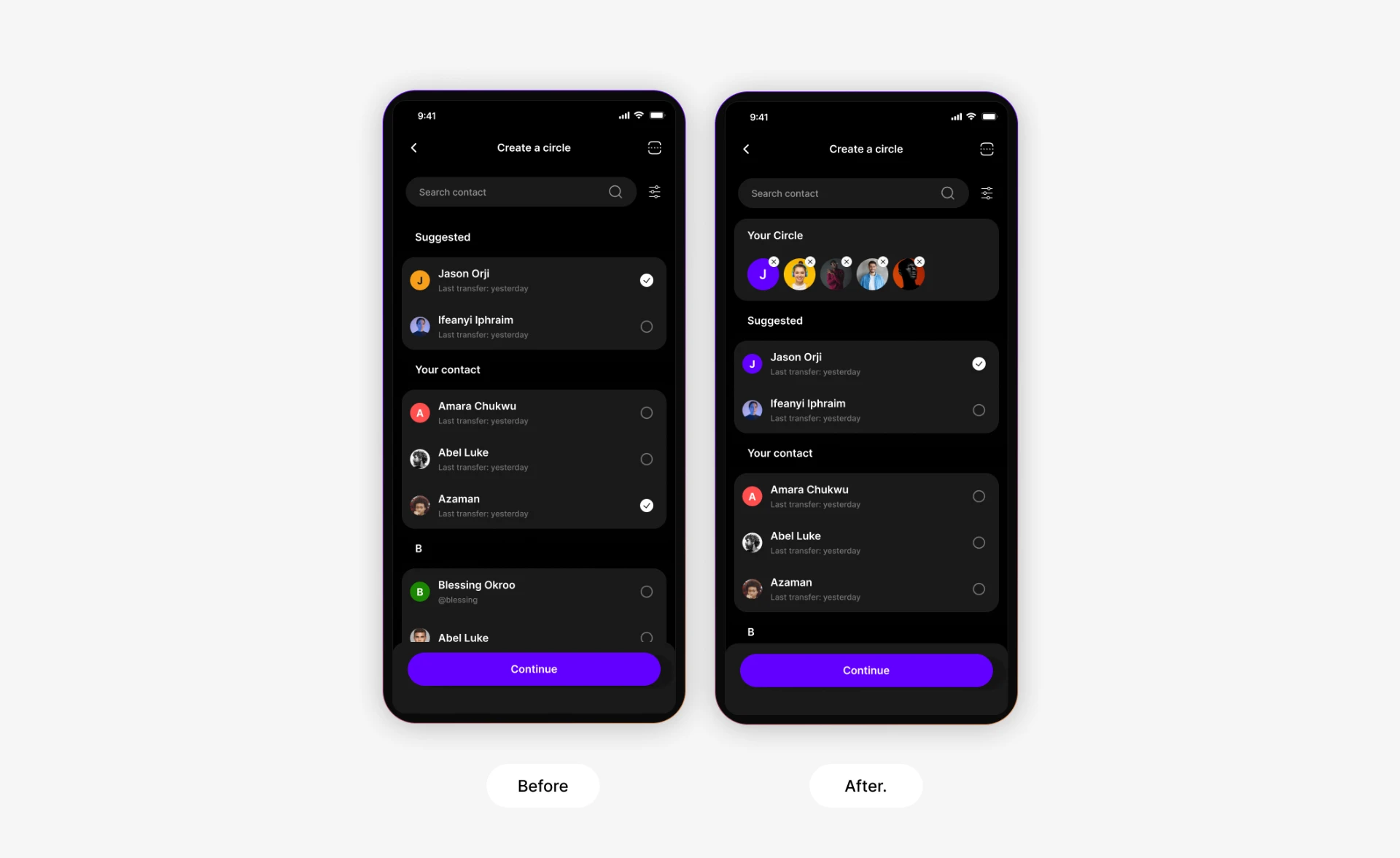
Adding members had a similar issue. After choosing several contacts, people couldn't see everyone they had selected without scrolling through the list again.
I added a row of selected members above the contacts. A small change, but it stopped people from repeatedly checking their choices.
Making it obvious who had paid
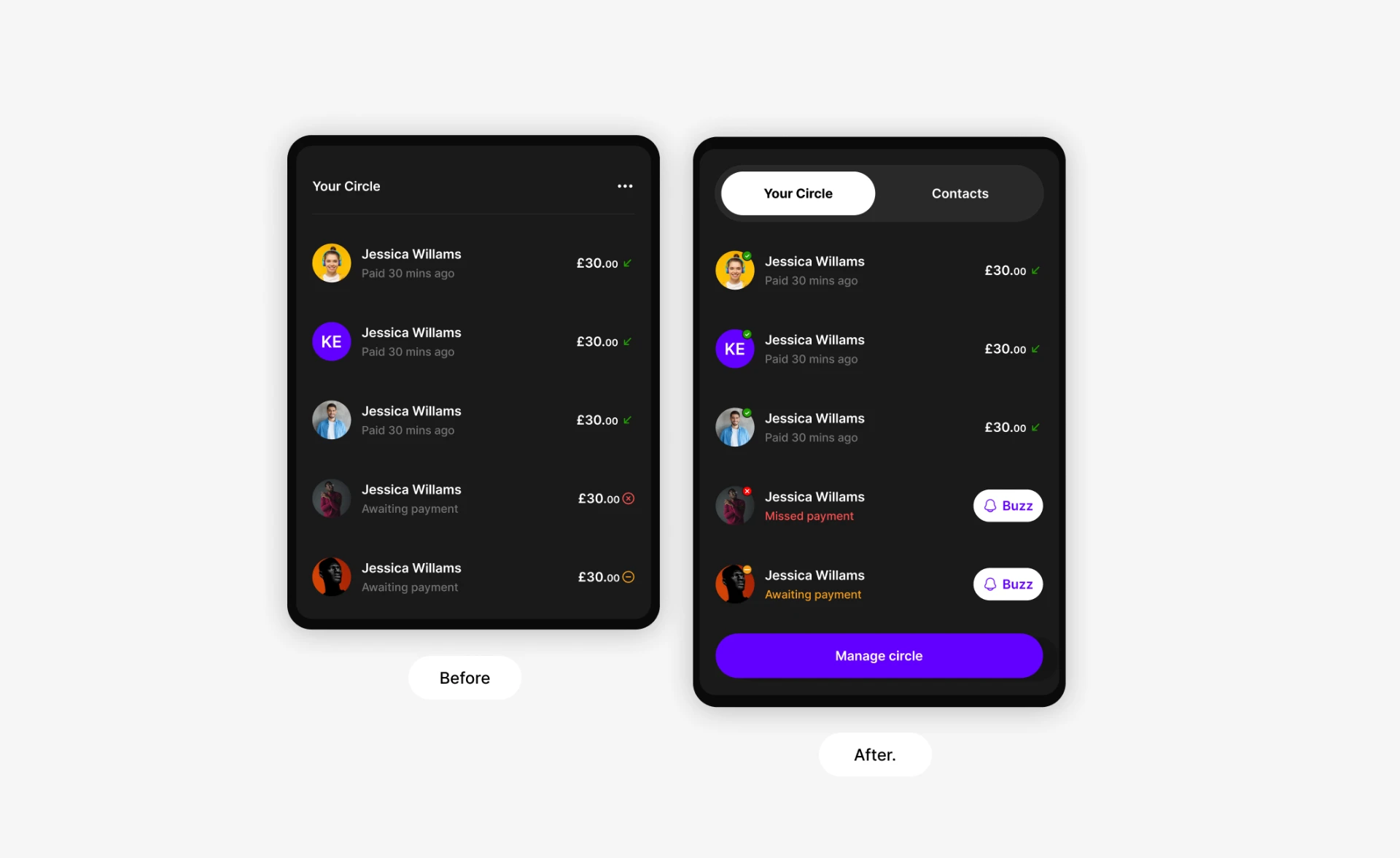
The first payment-tracking design used small icons beside each member's amount.
Someone who had missed a payment and someone whose payment wasn't due yet could both appear as "Awaiting payment."
Organisers still had to work things out themselves.
I moved payment status onto each member's photo and introduced clearer labels: paid, awaiting payment and missed payment.
We also added Buzz, which allowed organisers to remind members about overdue contributions through the app.
Imagine reminding a close friend to pay £100 after they've already received their scheduled payout credit. Buzz gave organisers a way to follow up inside the app.
The problem we didn't fully solve
Holding payouts until the circle ended addressed the risk of someone withdrawing early and disappearing.
But it couldn't stop people from missing contributions.
If one person stopped paying, the remaining members could still be affected. Their money was protected from an early withdrawal, but the group now had to figure out how to complete the cycle.
We shipped with reminders as the main way to handle missed contributions.
If I did this again, I'd design the failure rules much earlier. When should a member be removed? Should someone replace them? What happens to their previous contributions and accumulated interest?
Those answers would need to be agreed with product, engineering and the financial partner before becoming part of the experience.
What changed
After several rounds of testing and design changes, the project reported:
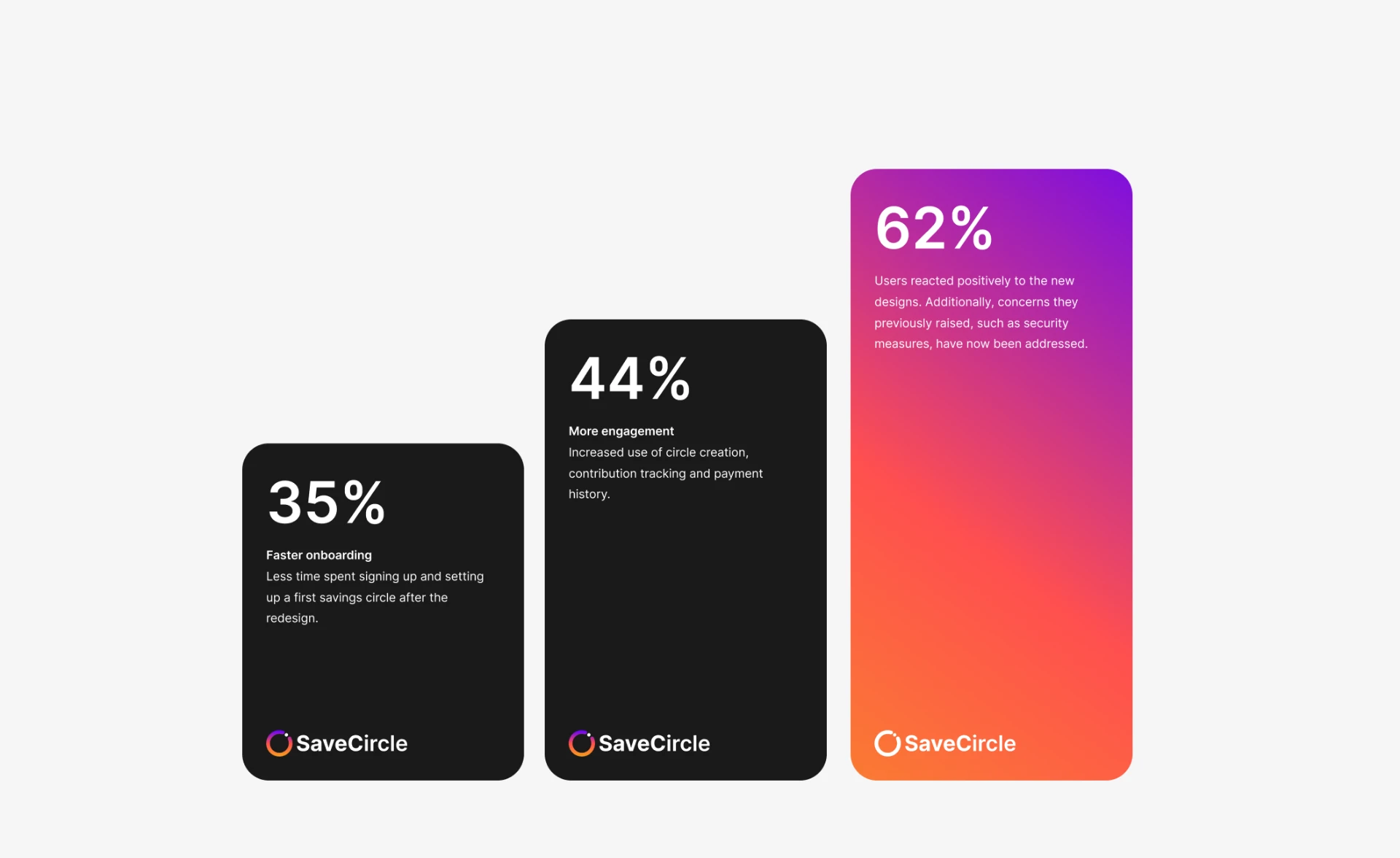
35% less time spent on onboarding and first-circle setup
People could create their groups and arrange contributions more easily.
44% higher engagement with core features
including circle creation, contributions and payment tracking.
In later testing, members could quickly tell how much had been credited to their balance, what was still pending and when they could withdraw their money. They no longer had to dig through transactions or guess why their savings weren't available yet.
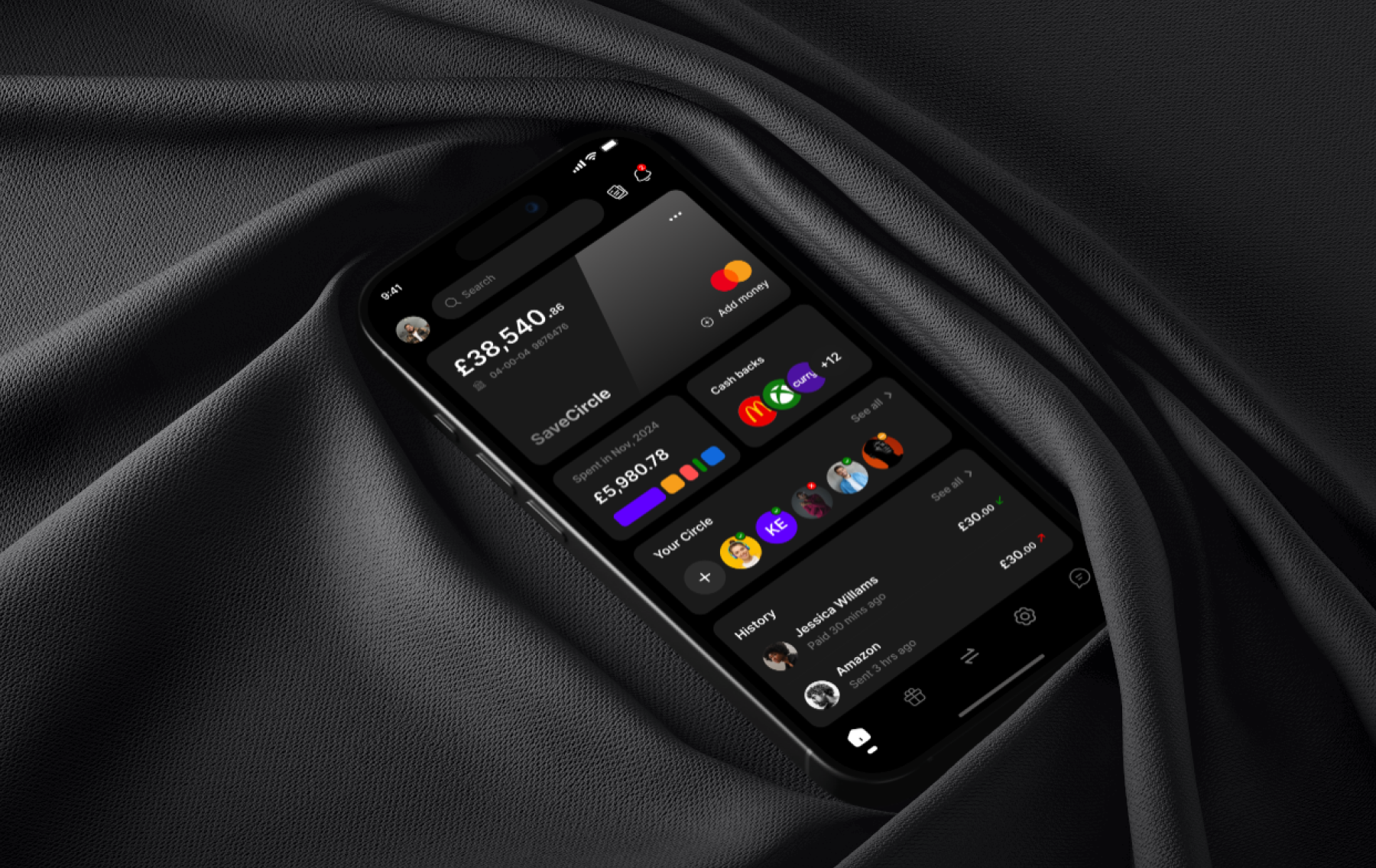
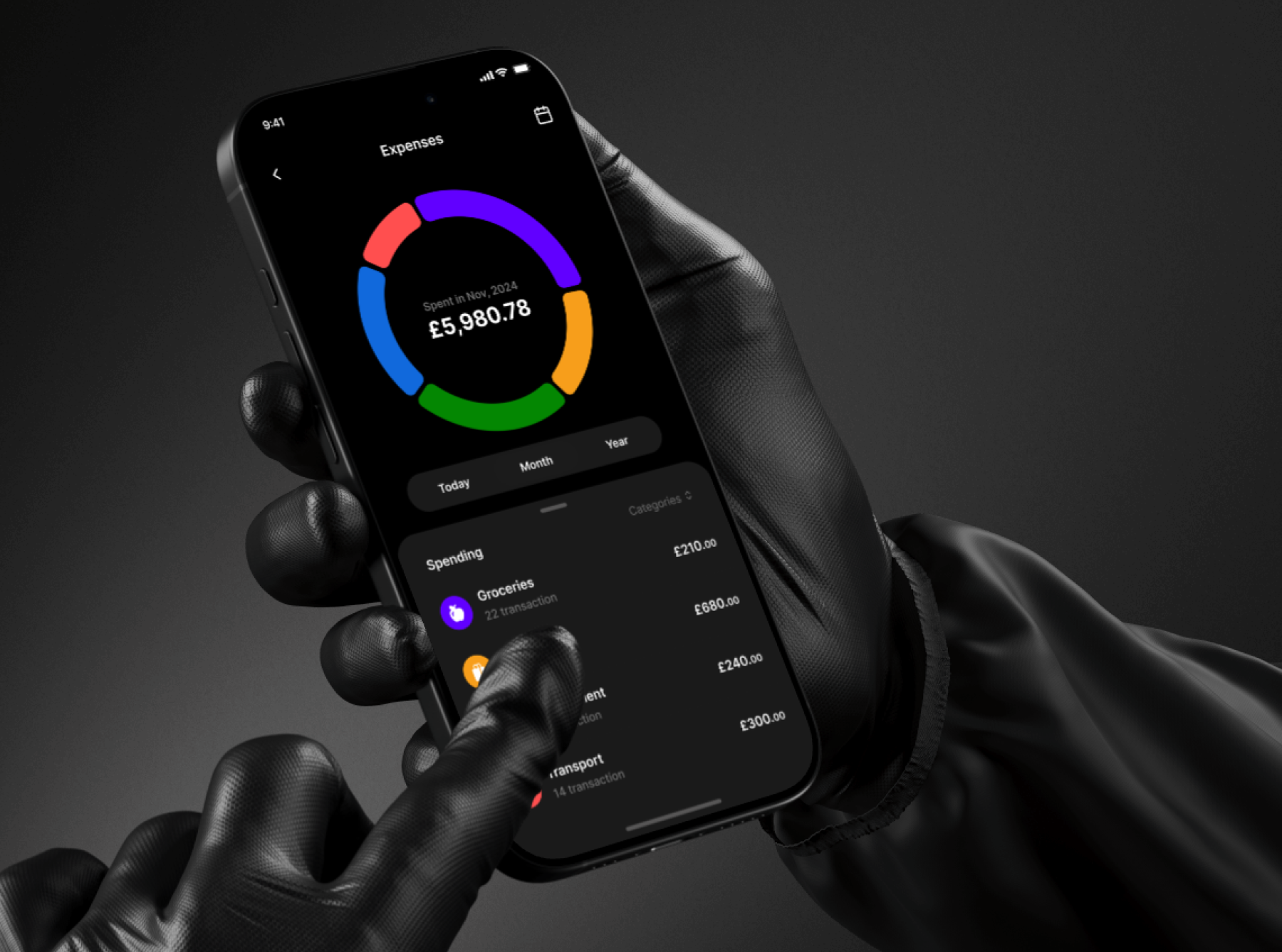
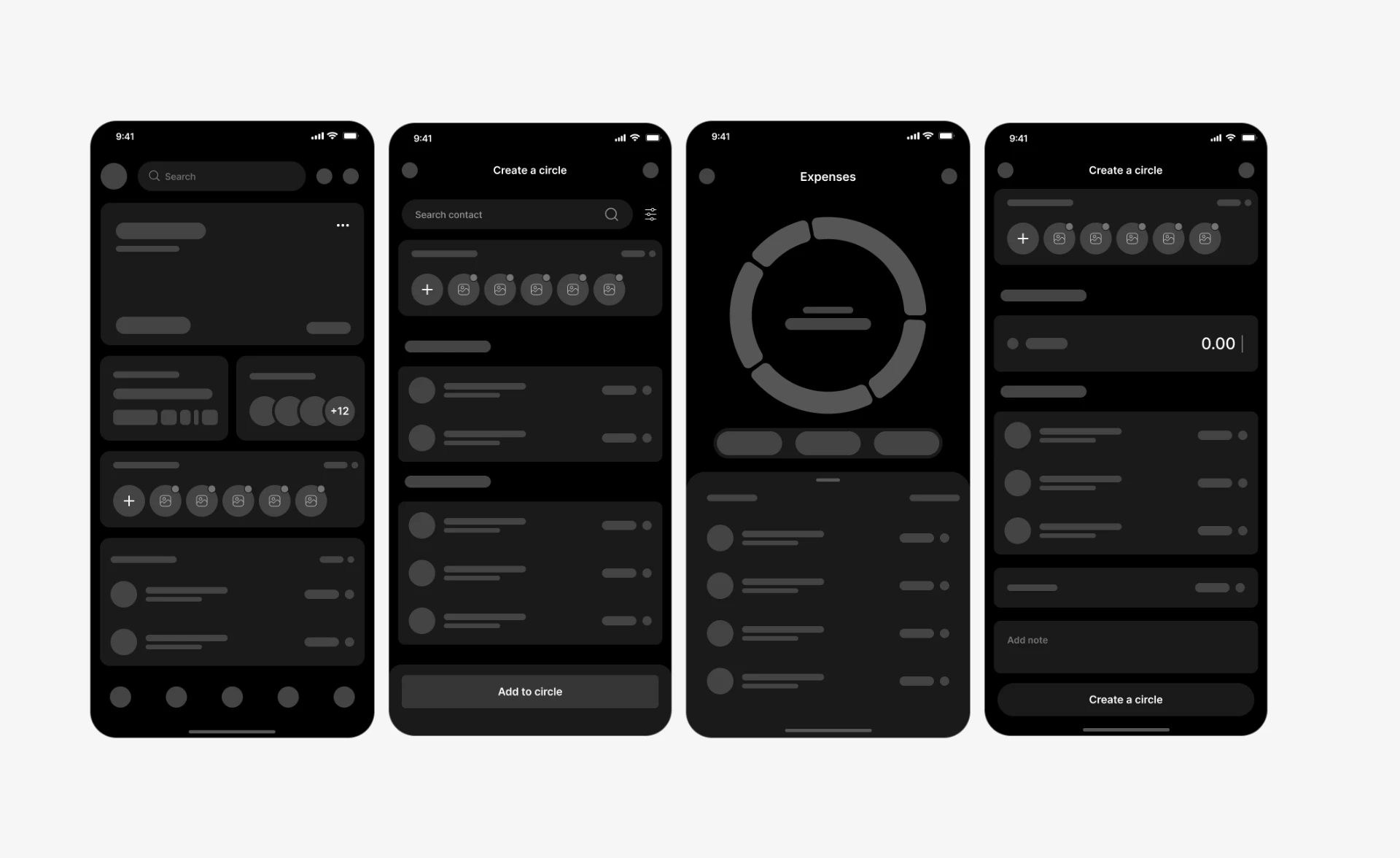
The shipped app brought group savings, contribution tracking, payment history and spending insights together.
What I would take into the next one
Working with a senior designers helped me question my decisions earlier. Sometimes I would explain why an interaction worked, only to realise I had not considered what happened when someone actually tried using it.
I would also spend more time designing what happens when a circle breaks down. We made saving together easier, but someone could still miss payments and affect everyone else.