The short version
GetaMeal was built to help independent home cooks sell food through a pre-order marketplace, and it was struggling. Cooks expected the platform to bring them customers, customers expected instant delivery, and the business could not provide either.
I spoke with 25 cooks and found something we had overlooked. Many of them already had customers. What they did not have was a proper way to manage orders, payments and the day-to-day running of the business.
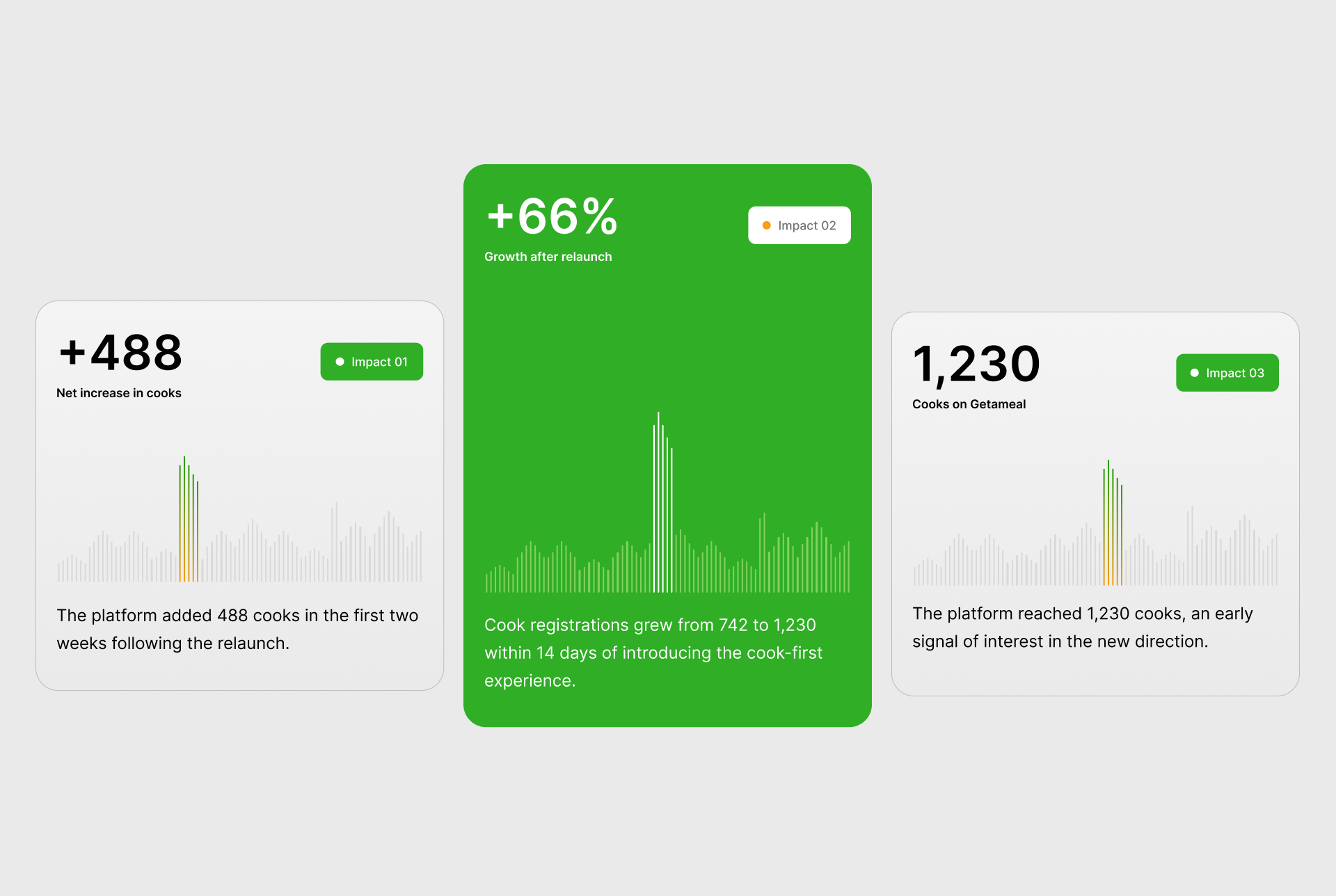
I proposed dropping the marketplace-first approach and turning GetaMeal into an operating system for cooks. In the two weeks after the relaunch, the number of cooks on the platform grew from 742 to 1,230.
Where we started
GetaMeal looked and worked like a typical food delivery marketplace: customers discovered cooks, browsed meals and placed orders. The difference was underneath. These were not restaurants with food ready in the kitchen and riders waiting outside. Cooks started cooking after a pre-order came in, handled delivery themselves, and sometimes sold portions meant to last a customer several days.
So customers arrived expecting food in 30 minutes, and cooks joined expecting GetaMeal to send them customers. Both ended up disappointed.
There were 742 cooks on the platform when I started. My brief was to improve the experience, but I was not convinced the interface was the real problem.
What the problem turned out to be
Talking to 25 cooks
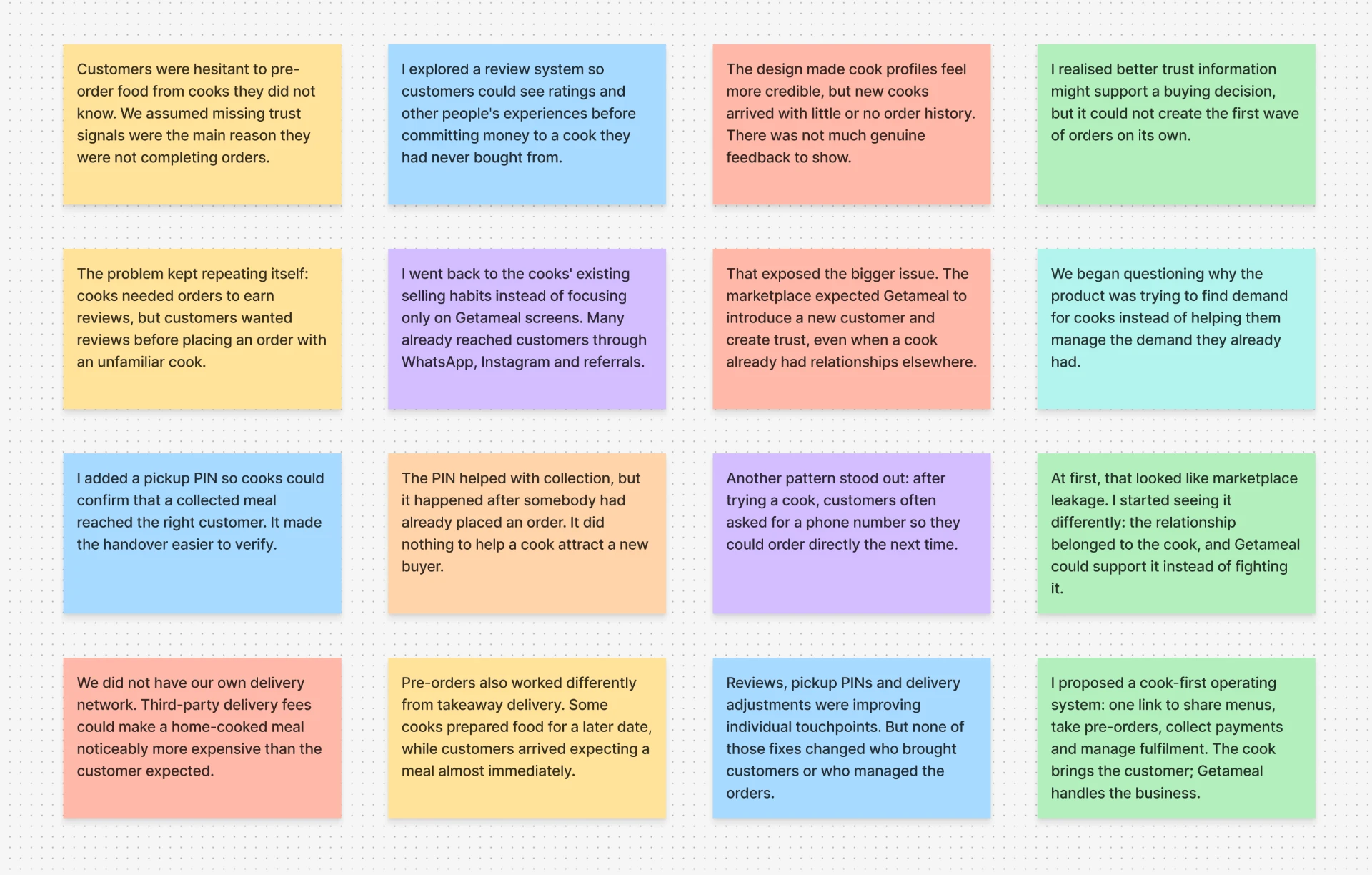
Before redesigning anything, I spoke with 25 cooks already on the platform. The complaint I heard most was that GetaMeal was not bringing them customers.
When I asked how they sold before joining, the answers changed my view. Many already had customers through WhatsApp, Instagram, referrals and repeat orders. A typical order meant sending a JPEG menu, pasting bank details into a chat, waiting for a transfer alert, writing the order down, collecting an address, and later scrolling back through messages to remember who ordered what. Some cooks were running their whole business like that.
We were trying to solve customer acquisition when the everyday problem was running the business.
Trust was the other issue. People were more comfortable pre-ordering home-cooked food from someone they knew, or someone a friend recommended. GetaMeal was trying to create demand, build trust between strangers and coordinate fulfilment all at once, which is a lot for one product to carry as an early stage startup.
Three decisions i made that changed GetaMeal
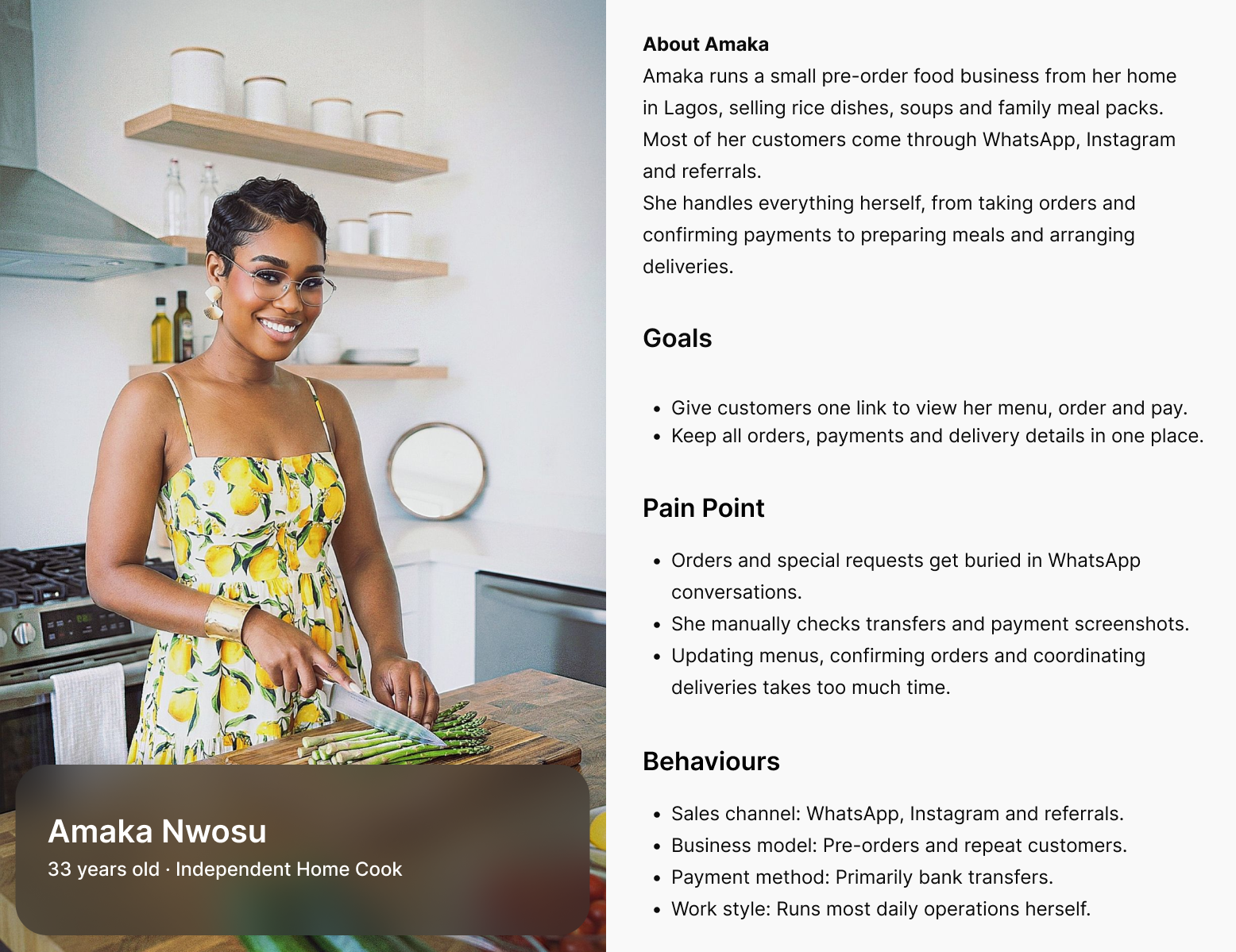
1. I tried fixing trust first. It did not work.
My first instinct was to make the marketplace feel more trustworthy, so I explored a review system that let customers see what others thought before ordering from a cook they did not know.
It made sense on paper, but it had a chicken-and-egg problem: cooks needed orders to get reviews, and they needed reviews to get orders.
I also added a pickup PIN so cooks could confirm food had reached the right person. It helped with collection, but it did not bring in a single new customer.
Meanwhile, something kept happening. After a first order, customers often asked for the cook's phone number so they could order directly next time. At first that looked like leakage, with sales moving off the platform. Over time I started treating that direct relationship as something to support rather than prevent.
Delivery made everything harder. We had no rider network, and outside delivery could make a meal noticeably more expensive. I was improving individual parts of the marketplace while the business model underneath stayed broken, so I stopped trying to make the marketplace work.
2. I proposed building for the cook, not both sides
I took the research back to the team with a different proposal. Instead of competing with Glovo, Chowdeck and the other delivery platforms for customers, why not build the software that helps cooks manage the customers they already have?
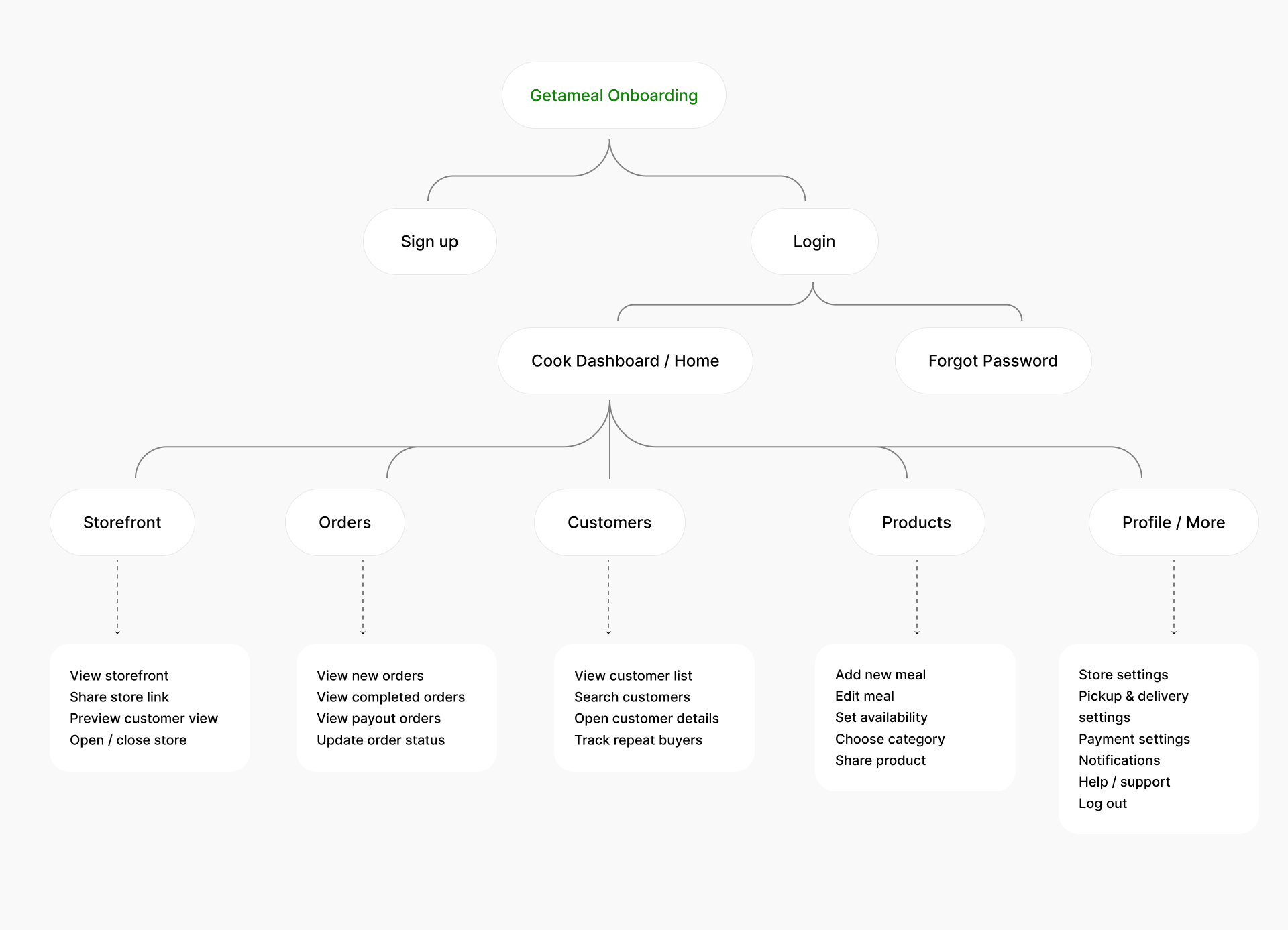
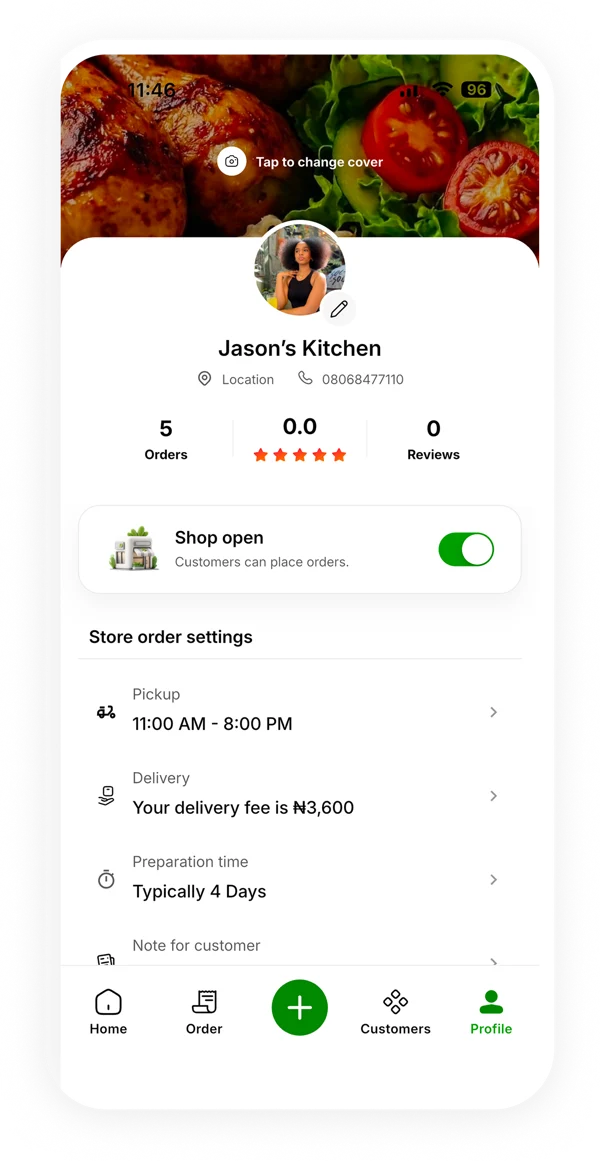
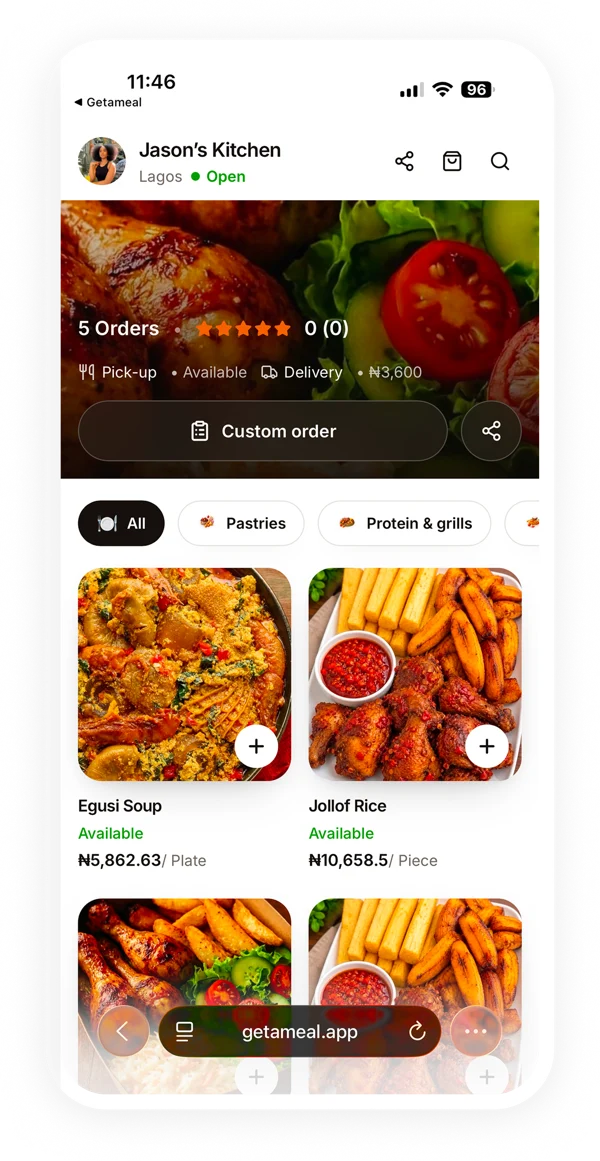
Every cook would get a storefront they could share anywhere. Their customers could view meals, pre-order and pay, and the cook would manage orders, payments and fulfilment in one place.
The cook brings the customer. GetaMeal handles the business.
That raised a hard question: how does GetaMeal make money without making life harder for cooks?
We settled on a 5.5% platform fee. Adding it at checkout meant customers would hit a surprise charge at the last step. Taking it from cooks cut into margins that were already thin. So I designed a Pass fees to customer setting, on by default, that builds the fee into the meal price. If a cook wants ₦10,000 for a meal, GetaMeal works out what the customer pays and shows one total, with nothing added at checkout. Cooks who would rather absorb the fee can switch it off.
The bigger trade-off was strategic. We gave up on owning food discovery and accepted that cooks would keep finding customers through their own channels. In return, we could focus on something we had a real chance of solving: making those sales easier to run.

3. I got the direction right, then made onboarding too complicated
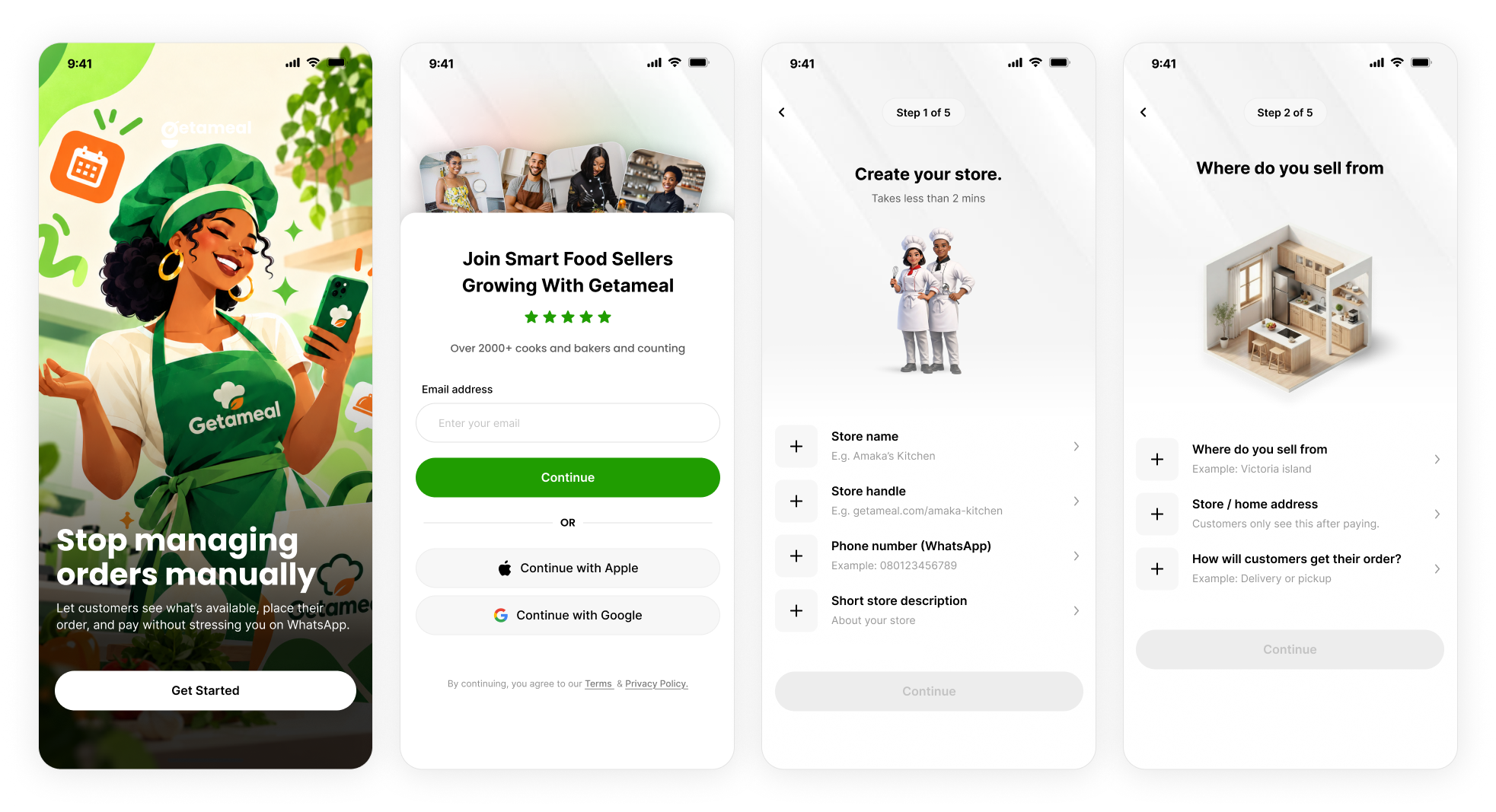
Once the team agreed on the cook-first direction, I moved to onboarding. My first version asked for almost everything upfront: store details, business information, payment setup, fulfilment preferences and the menu.
Together, they meant a cook who just wanted to start taking orders had to get through what felt like paperwork before seeing anything useful. I had designed setup around what the business needed to know, not what the cook wanted to do first.
So I cut it back to three things: create a store, add meals, get a link worth sharing. Everything else waits until it matters. Payment details are needed before a cook collects money, but they should not stop anyone from building a storefront. Fulfilment settings can come when the cook is ready to accept orders.
- 01Create a store
- 02Add meals
- 03Get a link worth sharing
What I took from it is that fewer screens does not always mean less friction. Often the bigger decision is when to ask for information at all.
What shipped
A simpler way to run a food business
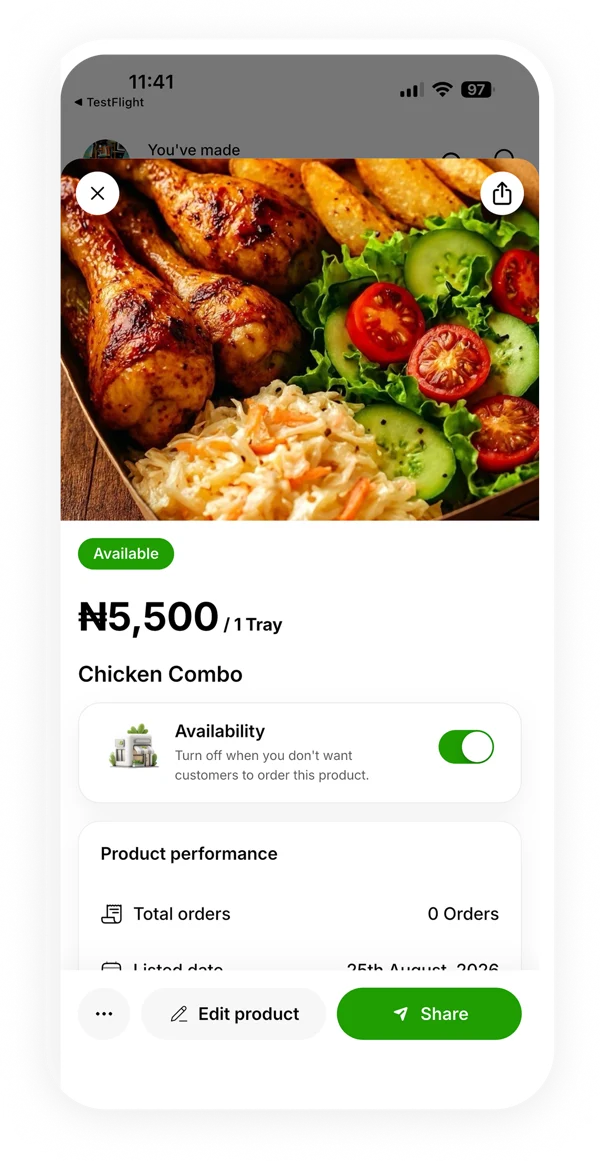
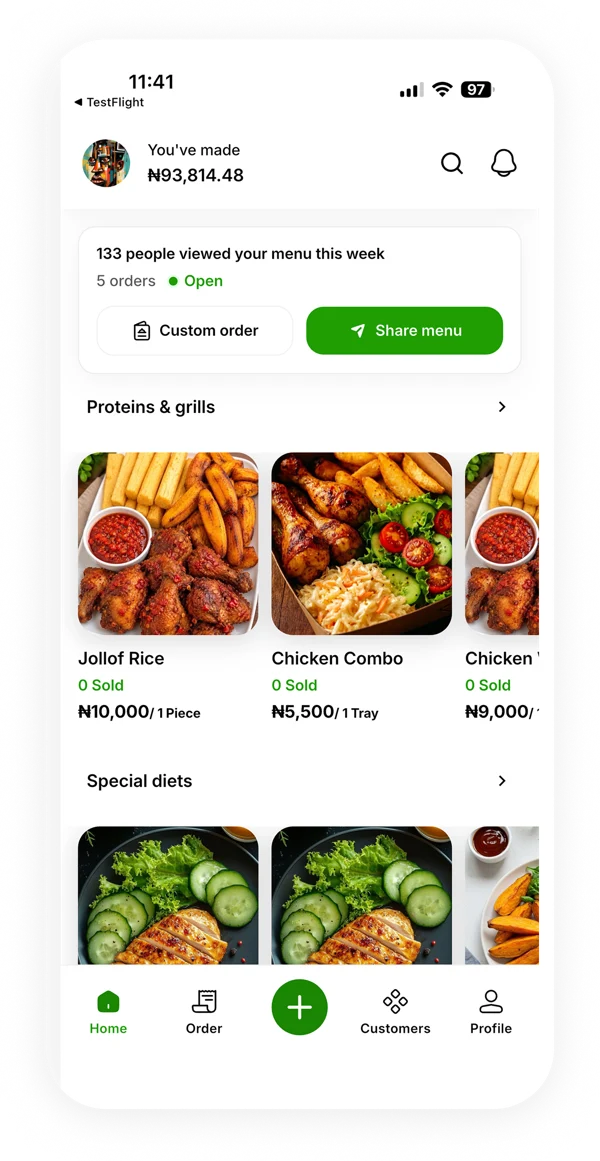
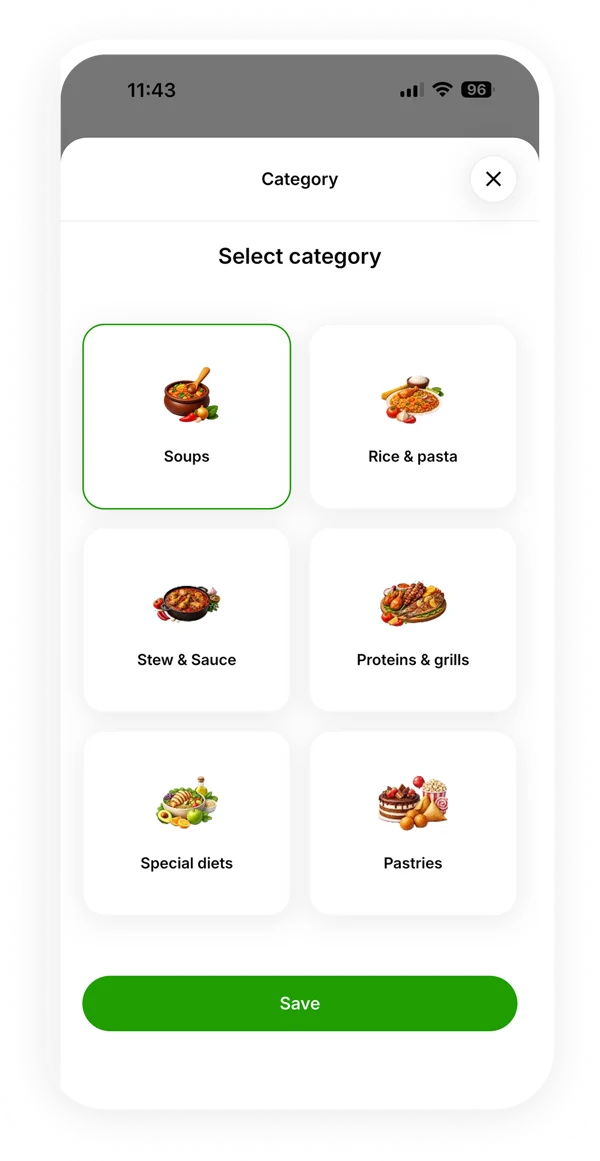
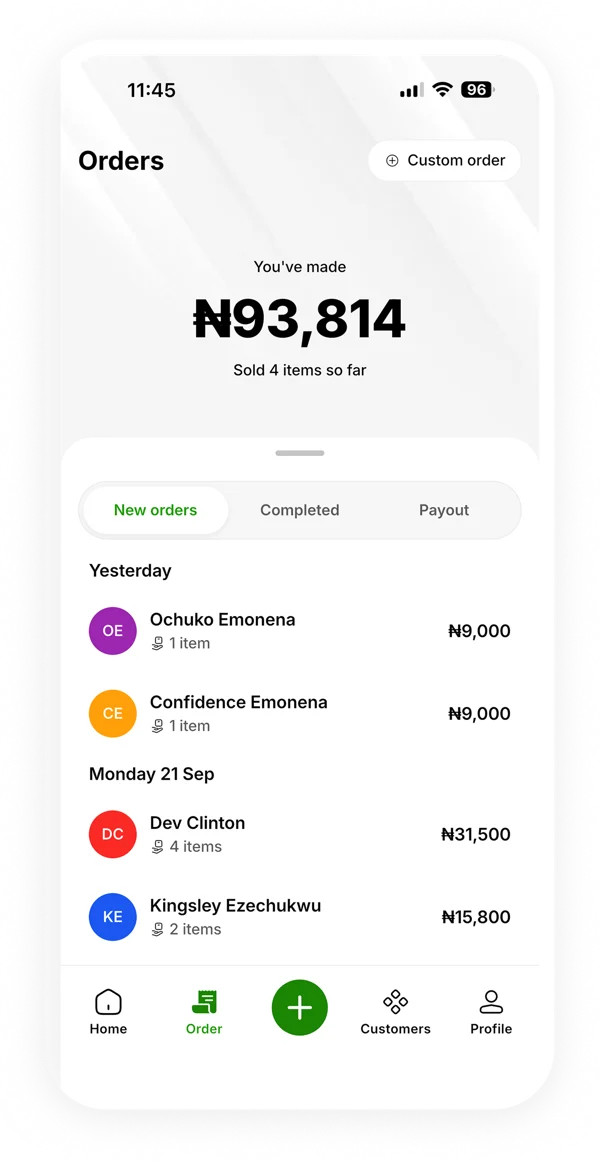
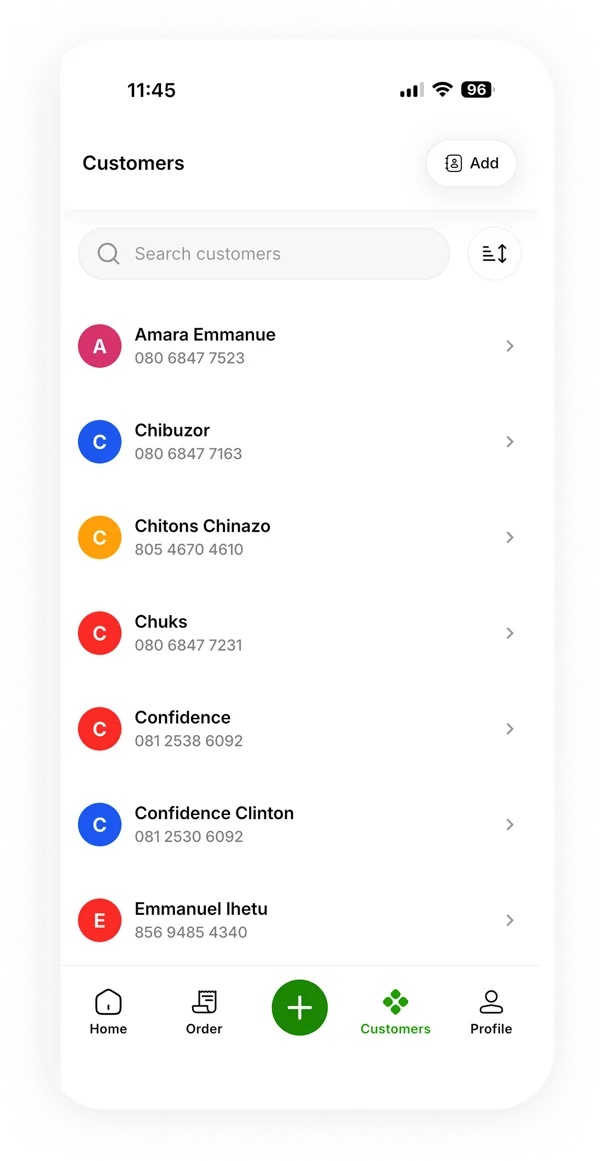
The redesigned GetaMeal was built around things cooks were already doing every day, and it did not ask them to leave WhatsApp or Instagram. It covered three connected journeys.
Set up and start selling.
Create a storefront, add meals, manage availability and share one link with customers.
Receive and fulfil orders.
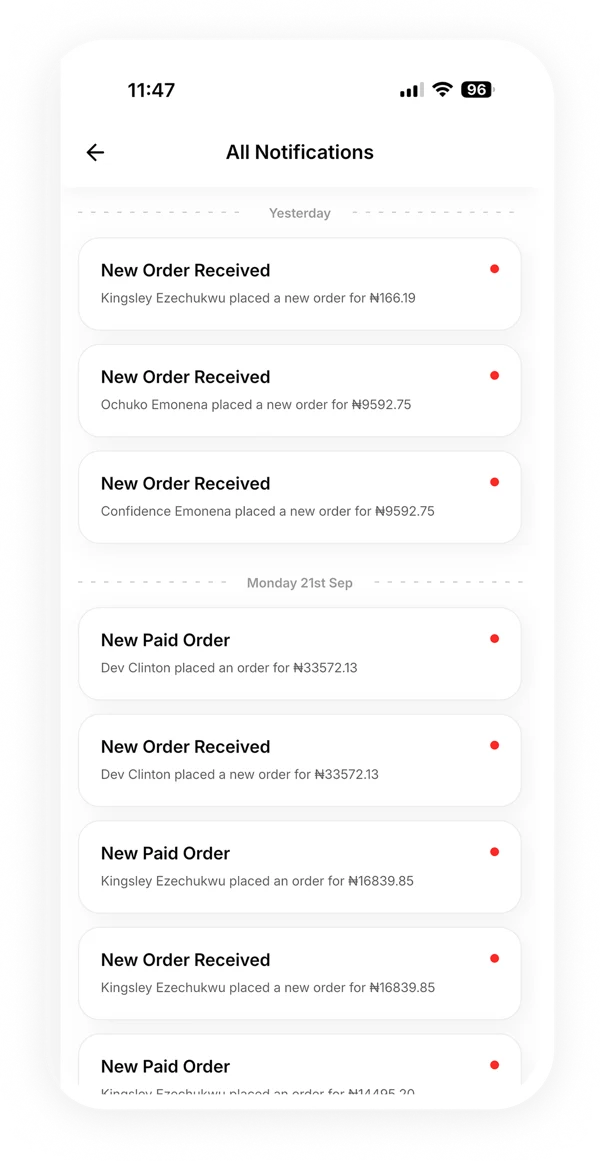
Customers pre-order and pay through Paystack. Cooks see verified payments, manage prep and track pickup or delivery without relying on chat messages or transfer screenshots.
Keep track of the business.
Customer records, order history and fulfilment status give cooks one place to see what is going on and spot repeat buyers.
One thing I deliberately did not build was another chat system. The team had explored it, but cooks already talked to customers on WhatsApp and Instagram, and those conversations were working fine. Where they fell apart was keeping track of orders and payments, so that is where GetaMeal stepped in.
Outcome
742 → 1,230 cooks
In the two weeks after the relaunch, the number of cooks on GetaMeal grew from 742 to 1,230. I cannot fully separate how much of that came from the redesign and how much from the relaunch announcement itself, but it was the clearest sign yet that cooks wanted what we were offering.
The business also had a clearer position. Instead of promising to bring cooks customers, GetaMeal offered them a better way to manage the customers they already had.
It did not solve everything. Delivery still depended on outside arrangements, cooks still had to grow their own customer base, and sign-ups alone do not tell you how many cooks will keep using the product. But we had stopped competing in a crowded delivery market and started solving a problem cooks dealt with every day.
Looking back
I was brought in to improve an existing product. If I had only worked on the interface, I would probably have shipped a better-looking marketplace that struggled for the same reasons.
The research changed the direction of the business, but the onboarding work showed me I could make the right strategic call and still get a UX decision wrong.
If I did it again, I would set up product analytics much earlier, and track how many cooks created a store, added a first meal, shared their link, got a first paid order and came back to fulfil another. The 1,230 cooks showed interest. Those events would show whether GetaMeal was actually becoming part of how they ran their businesses.